
Everywhere we turn, we’re offered a better version of ourselves. Stronger bodies. Sharper minds. Longer lives. Better mornings. Wellness has become a lifestyle, a movement, a thriving industry.
There are podcasts on spiritual alignment. Retreats for reset. Yoga studios on every corner. Supplements for longevity. Influencers documenting carefully curated routines designed to optimize every hour of the day.
But when was the last time you saw an 87 year old featured as the face of personal growth?
Wellness is everywhere. And yet it is rarely centered around older adults.
Do we stop caring at 65?
Of course not.
Many older adults continue to seek growth. They learn new skills. They explore new interests. They reflect more deeply. Expansion does not simply disappear. But there is an underlying shift in perception.
For younger adults, wellness is often framed as optimization.
For older adults, care is often framed as preservation.
That subtle shift matters.
As we age, health becomes more complex. Chronic conditions increase. Medications multiply. Mobility may change. Living situations evolve. In response, systems tighten. The focus turns to safety, stability, and risk reduction.
In long term care communities, we measure blood pressure. We track weight. We calculate fall risk. We prepare for surveys. These are essential. They protect life.
But health is not the same as wellness.
Health keeps the body functioning.
Wellness gives the days depth.
An individual can be medically stable and still want purpose.
They can be safe and still desire engagement.
They can be well managed and still crave meaning.
Even something as simple as yoga or tai chi can be viewed differently depending on age. For someone younger, it may be about balance and stress relief. For someone older, it may quietly represent confidence, stability, and reducing the risk of a fall. The activity may look the same, but the context changes.
When aging is framed primarily as decline, daily life can narrow. Fall prevention becomes alarms and low beds. Dining becomes nutrition compliance. Activities become scheduled time blocks.
Important? Yes.
Complete? Not quite.
Aging is not simply about maintaining stability. It is a different stage of development. One that still holds reflection, contribution, connection, and growth.
If the goal in long term care is only to extend life, we will focus solely on health.
If the goal is to enrich life, we must redefine wellness as relevant at every age.
Wellness does not expire.
And long term care has the opportunity to prove it.
The way we think about wellness and the way our organization talks about it shapes how we show up each day for the people in our care.
If wellness is seen as something extra, it will stay on the edges of our work. But when we recognize it as foundational, woven into comfort, connection, purpose, and dignity, it becomes part of everyday care.
A simple place to begin is with language. Use the word wellness. Say it in team meetings. Bring it into care conversations. Include it in daily routines. When we start talking about wellness differently, we begin thinking about it differently. And when our thinking changes, our actions do too.
What begins as a shift in words can become a shift in culture. Over time, wellness simply becomes part of who we are and how we care.
Author
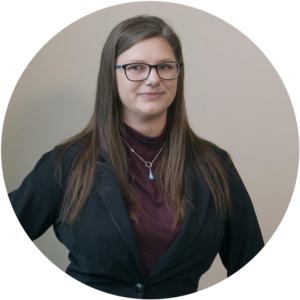
Amanda Keith, MSN, RN, PHN, PhD
Healthcare Academy Clinical Content Manager
Amanda Keith, PhD, MSN, RN, PHN, serves as a Clinical Content Manager for Healthcare Academy. Amanda has more than eight years of experience in nursing leadership and management across skilled nursing, assisted living, home care, occupational health, nursing education, and infection prevention.
Amanda holds a PhD in Nursing with a focus on Population Health. Her academic areas of interest include rural health disparities, social determinants of health, and health equity in infection prevention and control.
Amanda specializes in the development of evidence-based educational programs for healthcare professionals. Her work focuses on translating complex clinical and regulatory concepts into practical, accessible learning experiences that support the diverse learning needs of frontline healthcare workers. She has extensive experience creating continuing education, regulatory training, and competency-based learning programs designed to strengthen workforce knowledge and improve quality of care across healthcare settings.