In the last blog, we explored a simple idea: long-term care has the ability not only to extend life, but to enrich it.
Wellness is often associated with youth—fitness routines, mindfulness practices, personal development. Yet the desire for growth, purpose, and connection does not disappear with age. Even later in life, people continue to look for meaning in their days.
For leaders in aging services, that idea becomes practical very quickly. If wellness matters in later life, it needs to be visible in the way a community operates and in the environments people move through each day.
Many long-term care buildings were designed around clinical efficiency. Medication stations, documentation areas, and centralized nursing hubs shape how work moves through the building. Safety, supervision, and regulatory readiness remain essential priorities.
At the same time, wellness is influenced by the spaces people move through and the routines that shape their day.
Movement supports physical wellness.
Connection supports emotional wellness.
Purpose supports cognitive and social wellness.
Environment can either support those things or make them harder to achieve.
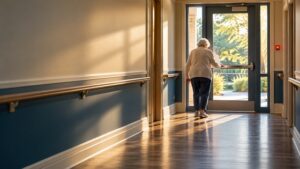
A hallway can simply move people from one place to another. With handrails that continue through common areas and a few points of interest along the route—artwork, photographs, or a small display—the same hallway becomes a walking path where people pause, talk, and continue moving.
Dining rooms influence wellness as well. Traditional service models often focus on efficiency: fixed seating, tight schedules, quick turnover. Small operational adjustments can change the tone of the room. Wider dining windows allow individuals to arrive at their own pace. Smaller dining groups encourage conversation. Simple roles such as folding napkins or arranging flowers allow individuals to remain involved in the life of the room.
Outdoor spaces often hold untapped potential for wellness. Many communities have courtyards that remain underused simply because access feels complicated or routines discourage spontaneous visits. Clear walking loops, seasonal planters, bird feeders, and raised garden beds can turn those spaces into places where individuals reconnect with nature and each other.
Environment does not always require renovation. Often it begins with noticing what already exists.
A quiet corner becomes a puzzle station.
A hallway wall becomes a rotating life story display.
A small counter near the dining room becomes a coffee or hydration station.
These simple changes encourage movement, conversation, and engagement throughout the day.
An unexpected benefit often follows: staff engagement.
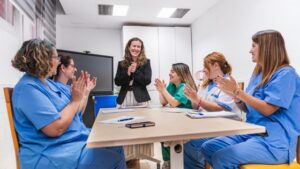
When leaders invite ideas about the environment, creativity tends to come from every department. Maintenance teams often see practical improvements that make spaces easier to navigate. Dietary staff understand how dining spaces influence the mood of the room. Activities professionals identify areas that could support hobbies, art, or games.
Direct care staff often notice things leaders miss. They see where individuals enjoy walking, where conversations begin naturally, and which areas feel inviting.
Even the individuals who live in the community often have the most meaningful suggestions. A garden space, a preferred walking route, or a small project area can transform an ordinary part of the building into something personal.
Inviting these perspectives builds ownership. Staff begin to see themselves not only as caregivers, but as contributors to the environment of the community.
Small ideas accumulate.
Maintenance installs raised garden beds.
Dietary introduces a hydration station with fruit-infused water.
Activities sets up an art table that remains available throughout the day.
Nursing assistants encourage short walks after meals because the hallway now feels like a destination rather than a corridor.
Each change supports wellness in its own way—movement, connection, participation, and purpose.
Leadership sets the tone for that process. When conversations include environment and daily experience alongside safety and compliance, teams begin to notice different opportunities.
Buildings influence behavior.
Daily routines shape expectations.
Environments either encourage wellness or limit it.
Leaders in long-term care have the opportunity to shape both.
Sometimes the change begins with programming.
Sometimes with operational policy.
And sometimes with something as simple as turning an unused corner into a place where people naturally gather and continue living their lives.
To support the ideas shared in this blog, targeted education can help teams bring these concepts to life in meaningful, consistent ways. Healthcare Academy offers courses available for individual purchase such as Person-Centered Communication, which equips staff to foster more meaningful interactions and strengthen daily connections, and Psychosocial Needs of the Older Adult, which builds understanding around purpose, engagement, and emotional well-being. Together, these courses reinforce the foundation needed to create environments that truly support wellness across every touchpoint of the resident experience. To explore additional courses, visit Online Healthcare Training Education | Healthcare Academy
Author
Amanda Keith, MSN, RN, PHN, PhD
Healthcare Academy Clinical Content Manager
Amanda Keith, PhD, MSN, RN, PHN, serves as a Clinical Content Manager for Healthcare Academy. Amanda has more than eight years of experience in nursing leadership and management across skilled nursing, assisted living, home care, occupational health, nursing education, and infection prevention.
Amanda holds a PhD in Nursing with a focus on Population Health. Her academic areas of interest include rural health disparities, social determinants of health, and health equity in infection prevention and control.
Amanda specializes in the development of evidence-based educational programs for healthcare professionals. Her work focuses on translating complex clinical and regulatory concepts into practical, accessible learning experiences that support the diverse learning needs of frontline healthcare workers. She has extensive experience creating continuing education, regulatory training, and competency-based learning programs designed to strengthen workforce knowledge and improve quality of care across healthcare settings.